My love/hate relationship with social media

Two years ago as I made the exciting step from, ‘person who scribbles words onto a page’ to, ‘published author’ (basically the same thing except someone is willing to pay you to do it), my editor suggested that I have a go at social media.

As a woman who hadn’t updated her Facebook status since joining in 2003, I felt a flutter of panic when she handed me a document all about the best channels for authors to erm, channel.

‘I’ve just joined Twitter and it’s quite good fun,’ she said with smiling encouragement.

‘Great,’ I replied with false cheer. ‘I’ll give it a go.’

And give it a go I did. After an exhausting morning setting up an author page on Facebook, I was spent.

I know.

Ridiculous.

I’m not sure if it was the fact that the exercise involved finding a decent photograph of my face (there are only three pictures of myself in existence that I actually like and I have used them all for author material) or writing something interesting about myself. It just felt like such a chore.

I am by nature self-deprecating (you will know this if you’ve read any of my other blog posts) and prone to outbursts of juvenile humour when faced with a) a compliment or b) the need to promote myself and my books.

But the days of people pottering in bookshops and finding my novels by joyful accident are long gone. I was an eBook author (I am now in print too) so online was the way to go.  You’ve got to sell it and sell it hard (sorry, just made myself giggle there) so I knew that I couldn’t stop with Facebook.

After a much-needed fish finger sandwich and a joyous half hour reading Nora Ephron, my sanity was restored. I was ready to face Twitter. Nora Ephron was behind me. She would have owned Twitter in her heyday. So would Jane Austen. And Dorothy Parker. I could do this. I resolved to be more positive and less like a grumpy teenager. Actually, it wasn’t too bad. I already had material from my Facebook page and there’s a reason Bill Gates invented ‘copy & paste.’ I’m not going to argue with Bill.

And Twitter is fun. There’s always something going on; an interesting article to read or an engaging person with whom to chat (plus the occasional weirdo chucked in for good measure). It has its own culture and etiquette and for the most part, people are kind and generous. If you are kind and generous in return, the rewards are there. It’s a souped-up version of real life; vibrant and alive and full of ideas (and weirdos).

But it can quickly become all-consuming. I’ve spent too much time reading something and nothing on social media, searching for goodness knows what when actually, I could have been offline reading (or indeed writing) a good book.

I’ve also read exchanges on Twitter and Facebook, where the conversation has become heated very quickly, where people deliberately seek to wind-up, annoy and ultimately hurt others. In some instances it’s plain trolling but in others, it’s normally rational people saying things they don’t mean as if they’ve taken leave of their senses. Frankly, it’s terrifying. This social media world isn’t for me. It’s too much.
I often wonder why people don’t just walk away and press the ‘off’ button in these instances. This kind of social media seems like an increasingly harmful addiction.

People’s brains are continuously active but not actually doing and we’re rapidly forgetting how to just be. We seem to constantly need to interact but not in person. We seem to need to communicate but not with individuals. We want to talk to the whole world at once but what happens if the whole world starts shouting back at us?

Nothing is private, nothing is off the agenda; everything is revealed, discussed and dissected. It’s exhausting and often damaging.

This was part of the inspiration for my new book, Life or Something Like It. My main character, Cat Nightingale has an impressive career in PR, is single, childless and blissfully happy. Social media is the foundation to everything she does and she can’t recall a life before it. Everything changes when a PR launch goes disastrously wrong and Cat has to take an enforced career break. This coincides with her brother needing someone to look after his two children over the summer. Suddenly, Cat has to look at life beyond the iPhone and it changes her forever.

So for me, social media is a big (mostly fun) party. But I don’t always want to be at a party.

Sometimes I want to just be, with my family, with my friends or in my brain. I want to press the ‘off’ button and see what happens. I want to watch Britain’s Got Talent with my kids without having to comment on Amanda Holden’s hair or watch the new series of Modern Family with my husband without having to declare whether it’s better than the last. I want to stare out of the window and dream up an idea for my next book.

I love going to parties but I love staying at home too. It’s the best of both worlds; social media is always there but so is the ‘off’ button. You’ve just got to learn to press it sometimes.

My beach hut heaven

There is a place as familiar to me as home, where I go every year with my family. I’ve been visiting the seaside town of Southwold in Suffolk on and off for my entire life.

My parents used to take us there for family holidays. I can remember the car journey, which seemed to last at least a year to my small person self. There would be a toilet stop at the Happy Eater (remember those?) and we knew we were getting closer when we drove over the Orwell bridge.

My father would sigh, ‘Or-well’. Every single time.

As the A-roads gave way to winding country roads and the landscape became flat and open, he would cry, ‘First one to see the lighthouse! First one to see the water tower!’

You couldn’t actually see the lighthouse from the road but you could spot the gigantic water tower on the common. Inevitably either my brother or I (usually my brother – he’s eight years older than me and at that time about three foot taller) would reply,

‘Seen it! I win.’

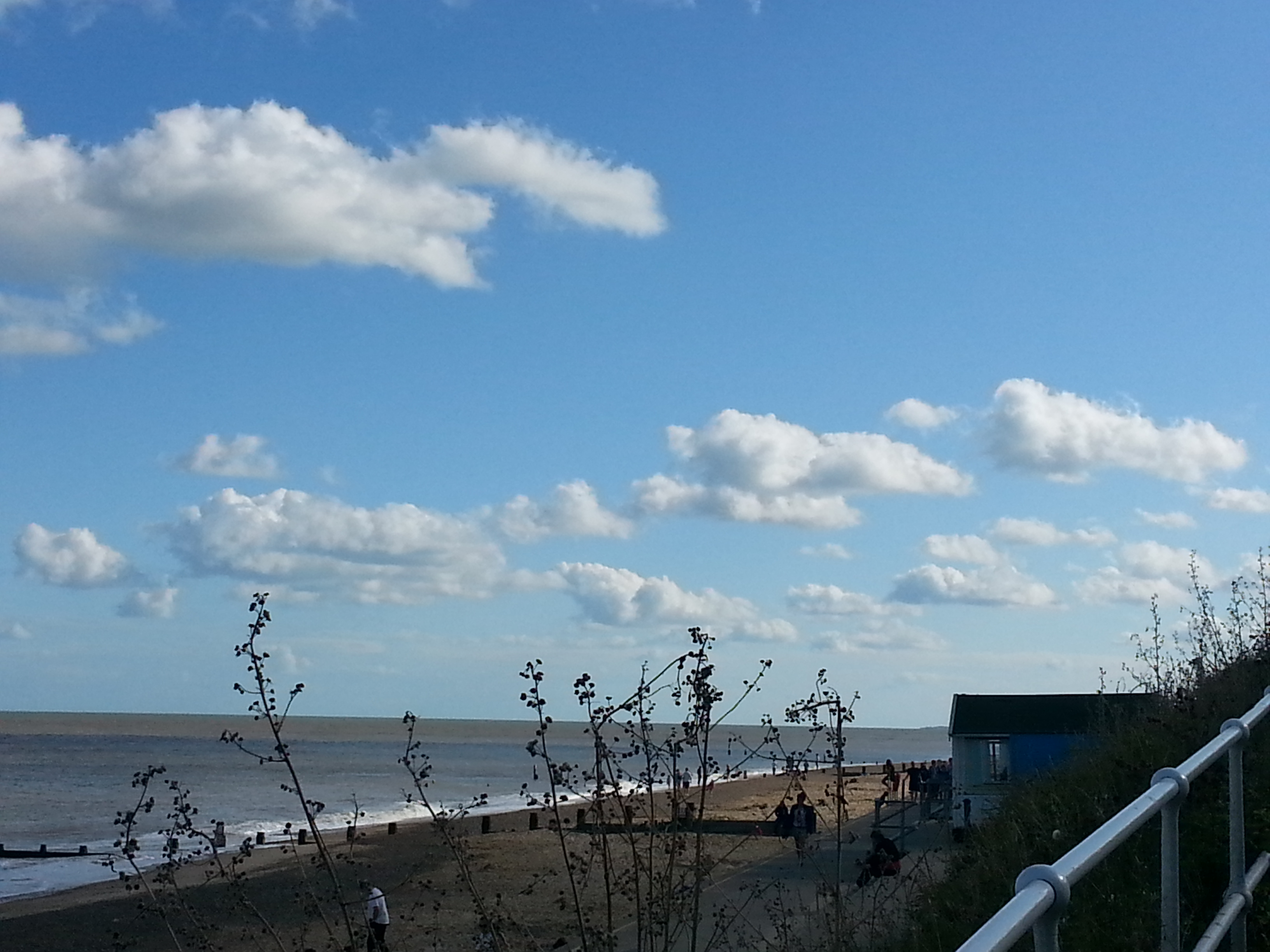
Photo pics dowloaded Nov 2014 843

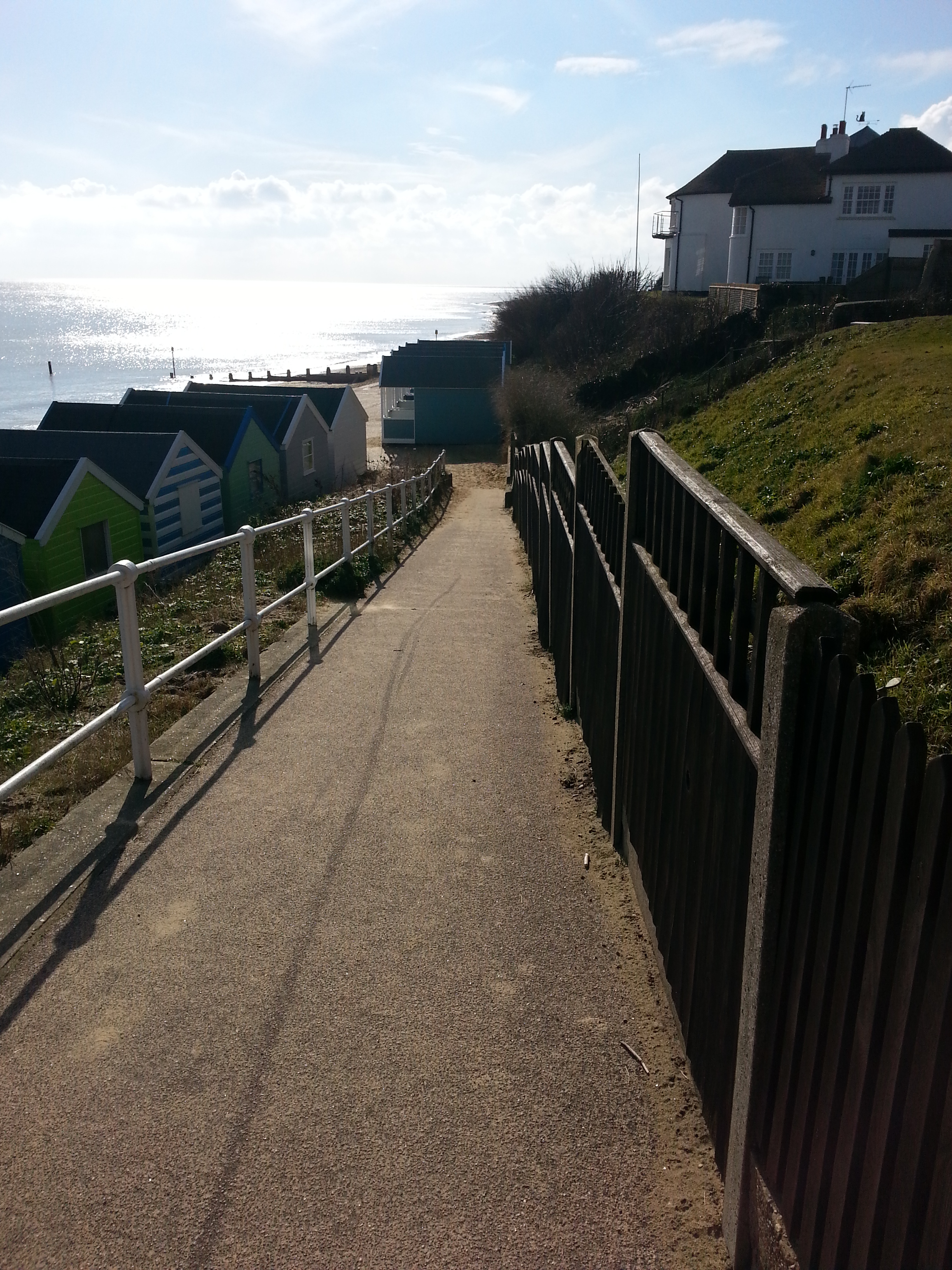
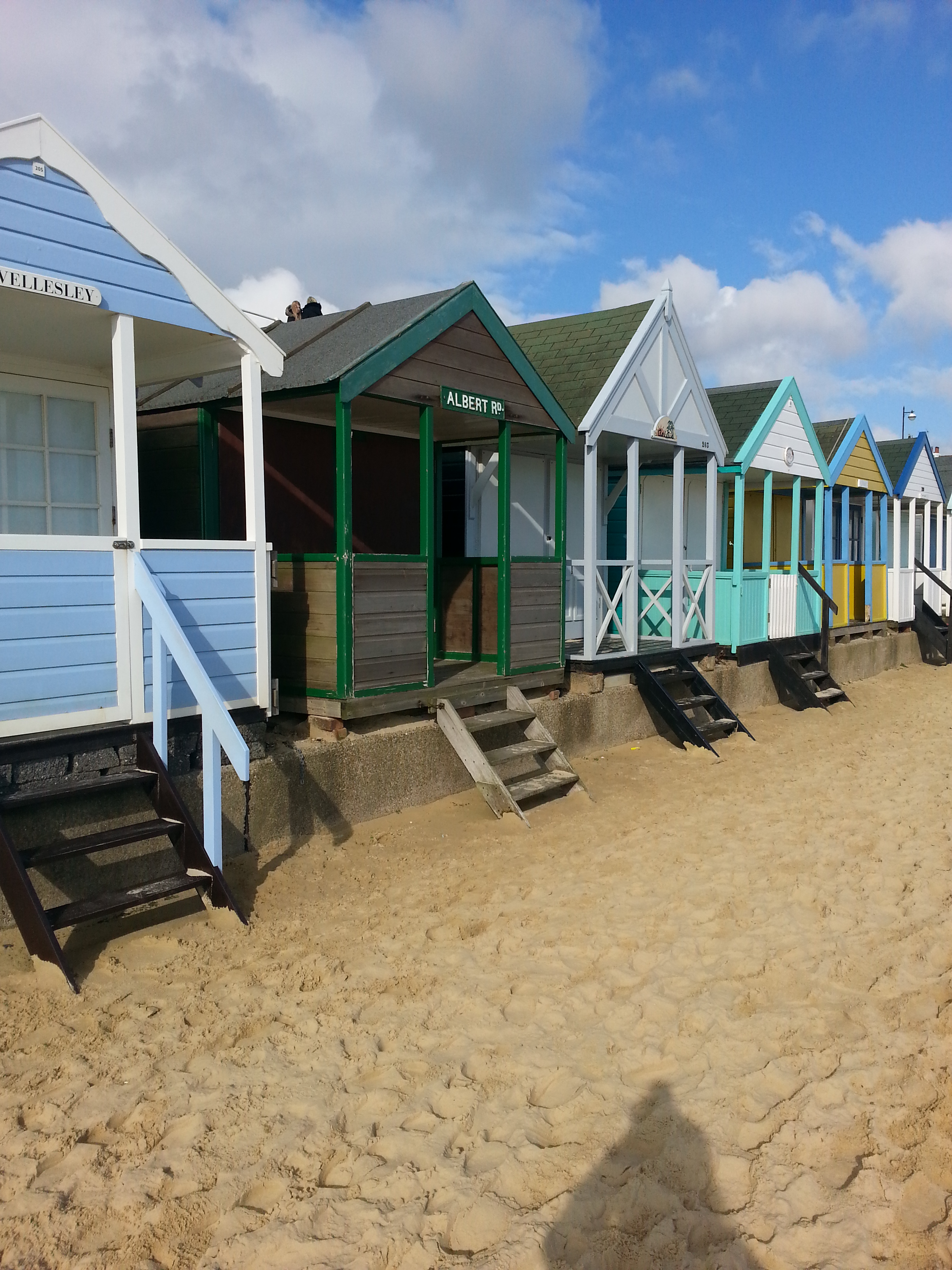
There’s one road in and one road out of Southwold. There are no traffic lights and up until about ten years ago, there were no high street shops apart from a couple of banks and an ancient Gateway (remember those?). From the horse-drawn carts that used to deliver the locally brewed beer to the dozen or so pubs around the town, to the multi-coloured beach-huts, which still populate the promenade, the town has an air of a place which never quite left the 1950s.

And it is to these huts every year that I go with my family. True, they are basically sheds by the sea and yes, one year after a particularly bad autumnal storm, our beach hut disappeared into the North Sea but it’s my favourite place in the world.

20150221_121435

For this is the place where I stop, where I still my mind and learn to just be again. We have enjoyed breakfast, lunch and dinner here, we have read books, played some very competitive games of Scrabble and solved the crossword every day. We have soaked up the sun and peered out at the rain, snug under beach towels.

There is no-where else in the world I get to do this and it feels like a precious treat every year.

This is where I sent Cat Nightingale in Life Or Something Like It, when I wanted her to take a step back and look at her life from a different angle. With no phone signal and nothing urgent to do, she starts to see what she really needs to make her happy. It’s not what she expects either.

20150221_121735

So I’ll be sitting in the beach-hut again this year with my book, games, newspaper and family, watching the world go by, allowing my mind to rest and unwind.

I can’t wait for my little slice of beach-hut heaven.

Three cheers for aunts and uncles!

When I was a child, we would visit my Auntie Emily and Uncle Alfred in their house in London Colney. I used to think the place sounded rather exotic because it had two names (I was born in Sidcup so my exoticness scale was limited). I also thought that its origins might have something to do with coal, because of the relative similarity of the words ‘Colney’ and ‘coal’.

Neither one of these statements was correct.

In actual fact, Auntie Emily was my father’s aunt and she and Uncle Alfred were childless, although they did have a large, bad-tempered cat named Old Boy.

I remember these visits as intriguing because of the lack of other children or indeed any items that might be of interest or stimulation to a young child. There was a draught excluder shaped like a dachshund that I would try to hug before receiving a warning glance from my Aunt.

There was a gold coin, which hung on the fir tree at the end of the garden. I was never invited into the garden. I’m not sure why, but I always suspected that Uncle Alfred didn’t want me to have that gold coin or possibly cause any damage to his prize dahlias.

Sometimes I would sneak off in search of Old Boy and often find him curled up on the counterpane, which covered my Aunt and Uncles’ bed. I can remember holding out a hand to stroke him one day and receiving a neat scratch for my troubles.

My aunt was a proud woman. She had worked in service as a cook and always laid on an extravagant meal, designed to impress. She had not reckoned on my five-year-old self when she served dessert one day. She introduced us to her, ‘Pear Condé’ with clutched-bosom pride. I took one mouthful and declared,

‘This is cold rice pudding!’

My mother squeezed my hand under the table with a mixture of silencing embarrassment and maternal pride.

I particularly remember having to kiss my aunt on arrival and departure – her pursed lips and round face with hair sprouting from her chin, as well as the electric shock I always received, made it a dreaded experience.

I had other aunties as I was growing up – friends of my mother who were christened ‘auntie’ but who weren’t relations. I loved these aunties. My mother’s best friend and her daughter were my favourites. They were my godmothers too. It always seemed rather cool to have a godmother who was only fifteen or so years older than me. She used to take me shopping or meet me and my mother for lunch during a break from her exciting job in fashion at Marks and Spencer’s head office. She always wore lovely clothes and smelt wonderful.

My children have a whole raft of aunties both related and unrelated and they love them all. Auntie Becs is amazing because she’s a doctor and not just a doctor but a consultant who does operations and everything. Auntie Sarah knows A LOT about Greek myths, which makes her a particular hit with my daughter. Auntie Marianne is pure magic with springy curly hair and according to my son, the best laugh ever.

They have uncles too. Uncle Nick is a bit edgy and takes the mickey out of their Mum. Uncle Pants is called Uncles Pants so that’s just about perfect. Uncle Cheese (so-called because my son couldn’t pronounce ‘Steve’ as a baby) will play any game at any time for as long as you want and never gets bored or have to do the washing-up, unlike Mum and Dad.

When I wrote Life or Something Like It, I wanted to give a little shout of joy to the aunties and uncles. Mums and Dads are all very well and vital, but aunties and uncles have the capacity to be something akin to super-heroes.

Cat Nightingale is no super-hero to start with. She’s not quite as bad as Auntie Emily but she has no idea how to be around children. When she is thrown into Charlie and Ellie’s world, she is what my children term, ‘an epic fail.’

She meets Finn, uncle to Ellie’s best friend Daisy. He is pretty much the perfect uncle – funny, fun and completely devoted to Daisy. Cat hates him on sight.

Cat thinks she can win the children round by treating their care like a PR exercise, by wowing them with grand gestures and showing them the world. She doesn’t realise that it’s the children who are about to show her the world and it’s a messy chaotic one, which she resists at first.

It’s her holiday with the children, Finn and Daisy that turns everything on its head and shows Cat what it’s like to be a proper auntie.

So I would like to raise a cheer for Auntie Cat, Uncle Finn and all those other aunts and uncles who make children’s lives that little bit more magical, who smooth down the edges for their parents and in the case of Auntie Emily, serve cold rice pudding to five-year-olds.

Downloading my brain with Cat Nightingale

As I limped, like a Duracell bunny whose batteries have finally expired, over the finishing line known as ‘the last day of term’, I realised that I was feeling a bit tired. We all get tired, right? We all feel a little run down and in need of a rest. Everyone craves a prolonged stretch lying down in a darkened room, preferably asleep.

The problem was, I hadn’t quite realised just how tired I was. I thought I could carry on doing a bit of social media here, a bit of writing there. It was my husband who put me straight.

‘You need a break. From everything.’

He was right. Apart from writing, I have my children, my ageing parents and all the other ‘stuff of life’ to sort. I sometimes feel like a computer whose memory is too full.

‘No space available’.

I needed to download.

A week later we went to Cornwall. I had the good sense once upon a time to marry a Cornishman so we go to the south-west quite a bit. We stayed with my mother-in-law (a good one in case you’re wondering) for three nights before heading further west to camp on a farm in Sennen, near to Land’s End.

IMG_0184

One of the things I like most about camping is the way it forces you to just be in the moment. That and the fact no-one expects you to wash. Or brush your hair. It’s like the early days of motherhood.

IMG_0201

Anyway, I like to try to be ‘in the moment’ if I can.  I’m not very good at that mindful stuff. I need a lot of practice. I get distracted by thoughts of what we’re having for tea or if I remembered to lock the back door. Still, it’s good to try. Actually, I think it’s quite important for your soul.

It’s also one of the themes I explored in my l latest book, Life or Something Like It. The main character Cat, is forced to step down from her high-powered job for a while and ends up looking after her brother’s two children over the summer. On a holiday to Suffolk, where the phone signal is patchy, she has to slow down and learn how to just be again.

Time slows down on a campsite, there’s nothing to rush for. Admittedly a few star jumps during the early evening will keep you warm as the air grows cold but apart from that, you’re on a go-slow. No hurrying allowed.

IMG_0163 (1)

I also didn’t see a single person with a phone, apart from for photographing purposes. There were no children playing on iPads. Instead I noticed several small boys sitting together, each with a snail balanced on the top of one hand, happily chatting to their new pets. I saw older children riding bikes or kicking footballs. I was startled by a small girl as I returned from the loo one evening who held up her clasped hands to me and squeaked, ‘I caught a cricket!’ Her face was a picture. She reminded me of Ellie from Life or Something Like It, and it made me smile.

So we sat outside our tent, watching the sun rise and fall behind a perfect slice of blue sea, we ate weird but delicious ‘codge-ups’ of food, we followed the secret path towards the magical promise of beach below, we clambered over the rocks, we ate pasties on the sand and mussels in the sea-front pub at Sennen.

IMG_0181

Of course, I have to insert a caveat here. Had it been a) raining b) two degrees cooler or c) noisy, I would have enjoyed it a good deal less but it wasn’t.

It was wonderful and the perfect place to download my brain and just be for a while. Cat Nightingale has taught me well.IMG_0188


To be or not to be – a mother

When I ask my ten-year-old daughter if she might want to have children one day, the answer is swift and uncompromising.

‘No way. It’s completely disgusting and babies are really annoying.’

Fair enough. I have only recently told her about the facts of life and let’s face it, the biological aspects can be pretty jaw-dropping and a tad chucklesome.

I tried to keep it together when the book explained that testicles are often called ‘nuts’ and ‘balls’ due to their approximation in size to walnuts and er, balls during a boy’s development but ended up snorting with uncontrollable laughter. My daughter gave me the Paddington bear stare for which she is known in our family and said, ‘It’s okay, Mum. Just take a moment if you need it.’ Yup, I clocked the role reversal there too.

My point is though, that the question of motherhood hangs over a girl’s head from a very young age. It is jokingly posed through youth but then, when a girl becomes a woman, it’s as if the hourglass of expectation (an expectant expectation you might say) has been turned. The question is now serious. When and if not when, why not?

This was a theme I wanted to explore when I wrote ‘Life or Something Like It.’ My main character, Cat Nightingale has a successful career in PR. She loves her five-star life and is happily single. Above all, she doesn’t want to have children and is unapologetic about this fact. And why shouldn’t she be? It’s her life, her choice and therefore no-one’s business but hers, right?

I think you see where this is going.

At every turn, her life decisions are questioned or worse, an assumption is made. She smiles at a baby on a train and the child’s mother asks her about her children. Her business partner’s wife is incredulous when she asserts that she never wants children. Her brother assumes she is single and childless because her horizons are too narrow. None of these people is unkind, none of them is being mean. They just make assumptions because that’s what people do.

When I was researching the book, I did a straw poll among a cross section of women in their twenties and thirties. I was a little shocked because I always thought that the questions about impending parenthood started mid-thirties; that good old ‘biological clock’ poser – a favourite of elderly relatives who use old age as a handy excuse to be a bit rude. But no, apparently women in their twenties, who are young enough to be my daughter, are being asked the question on an almost weekly basis.

I find this extraordinary. When did we all become so obsessed about the need to reproduce? I mean, I know it’s a basic instinct (and not in a Sharon Stone, no-pants way). I know the human race needs to keep a good supply of humans to avoid extinction but 7 billion and counting? I think we’re fine for now.

I read an interesting article by Rosamund Urwin (see link below) about the cult of parenthood and it made me a little ashamed. I’m a parent but I have never told anyone that they’ll, ‘change their mind’ about having children but then I am in the majority. Have I unwittingly made people feel bad because they didn’t have children? I sincerely hope not and if I did, I am truly sorry. I can only suspect that if parents make the child- and care-free feel bad, it’s mainly because they’re jealous.

In her article, she cited the story of Joel Andresier, who had put a buggy for sale on ebay calling it, ‘the green monster’ because it, ‘signifies everything that ended my happy, care-free, low-cost, child-free life.’ I get this. I absolutely do. When I first had my daughter, I couldn’t quite believe that my old life had gone; the enormity of this fact hit me square in the chops like a well-placed right hook.

And yet no-one admitted it. None of the other parents I knew would talk about it. No-one would say, ‘this is actually a bit boring’ or ‘I’m not sure if I like this’. You’re not allowed to admit it. You are blessed and frankly, you had your twenty minutes (or hour if you’re lying) of fun at the conception. This baby needs you. Get on with it.

So get on with it we do and honestly? The first year of both babies’ lives was intense and hellish, for the first because I hadn’t a clue what I was doing and for the second because I had a baby and a toddler and still no idea what I was doing.

But now? It’s good. It’s really good. I do feel blessed and lucky. My kids make me laugh and cry and shout. Other people do this too. I just don’t love them as much. But this is my world and this is what makes me happy. Parenthood isn’t for everyone and we need to stop pretending it is.

When Cat has to step down from her job for a while and her brother asks her to look after his two children, she is thrown into a world of which she has little or no knowledge. She initially approaches it with her efficient, controlled, PR hat on. Unsurprisingly, it’s not long before the hat slips.

But this isn’t about a woman discovering untapped maternal longing. It’s about both sides and what they can learn from one another. Cat Nightingale is unapologetic about her child-free existence and I am unapologetic about choosing motherhood.

Surely the most important thing is to respect each other’s point of view and keep your nose out.

LOSLI - don't you want children

The Cult of Parenthood – Rosamund Urwin